Colour is one of the most exciting parts of decorating a home, but it can also be one of the trickiest to get right. With thousands of shades to choose from, it's hardly surprising that we sometimes find ourselves staring at endless paint samples and wondering where on earth to start.
The good news? You don't need to be an expert in colour theory to create a home that feels beautifully put together. A little understanding of how colours work together, and more importantly, how they make us feel, can make all the difference.
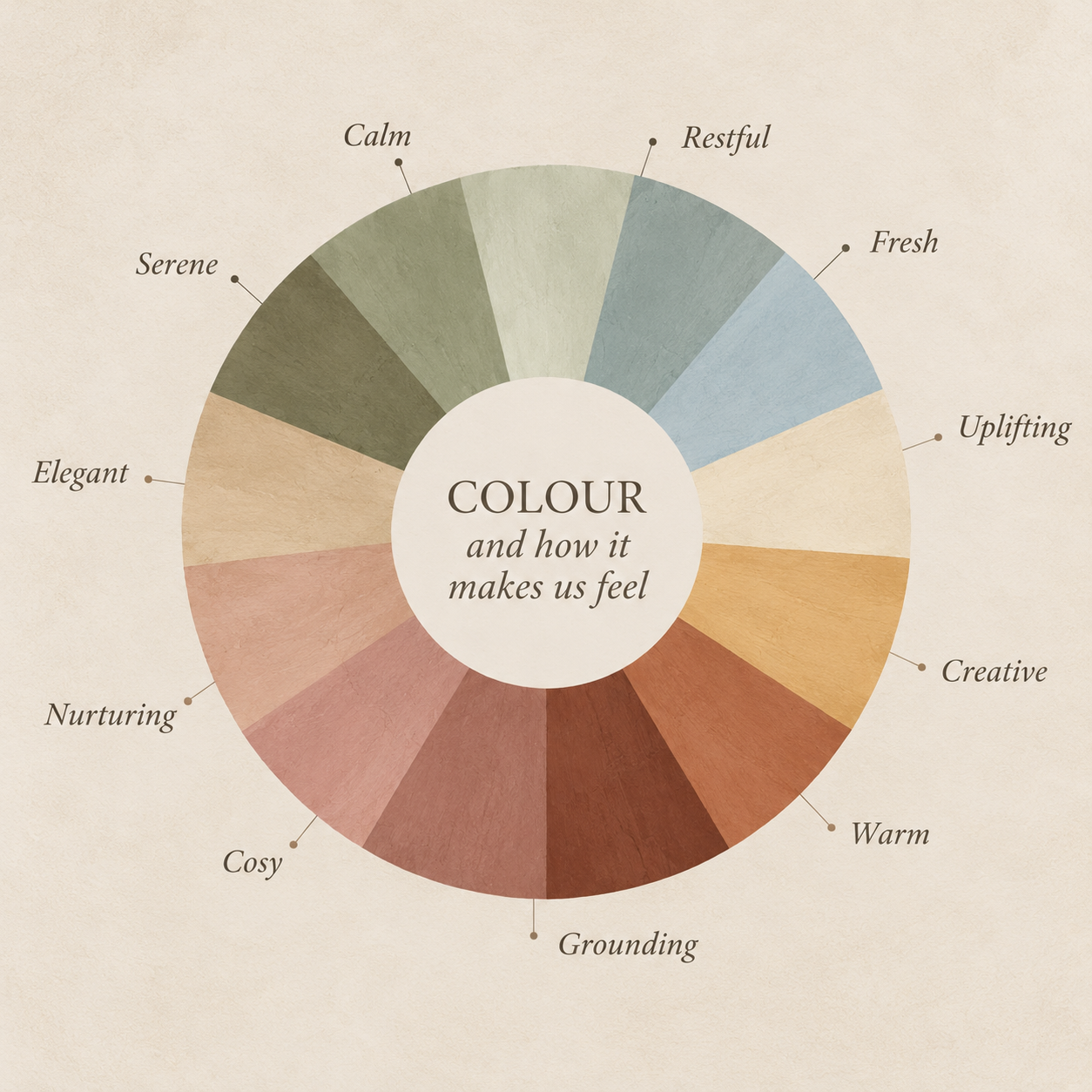
Why the colours we live with matter more than we think.
Have you ever walked into a room and instantly felt at home? Or perhaps you've been somewhere beautifully decorated, with gorgeous furniture and everything perfectly in its place, but somehow it just doesn't feel quite right?
Well, there's a good chance colour has something to do with it.
Colour is one of those wonderful things that we all have an opinion on, whether we realise it or not. Some of us love bold, rich colours, while others are happiest surrounded by soft, gentle neutrals. And then there are those of us who spend three weeks choosing between five almost identical shades of beige. (We've all been there!)
But here's the interesting bit. Colour doesn't just change how a room looks. It can change how a room feels.
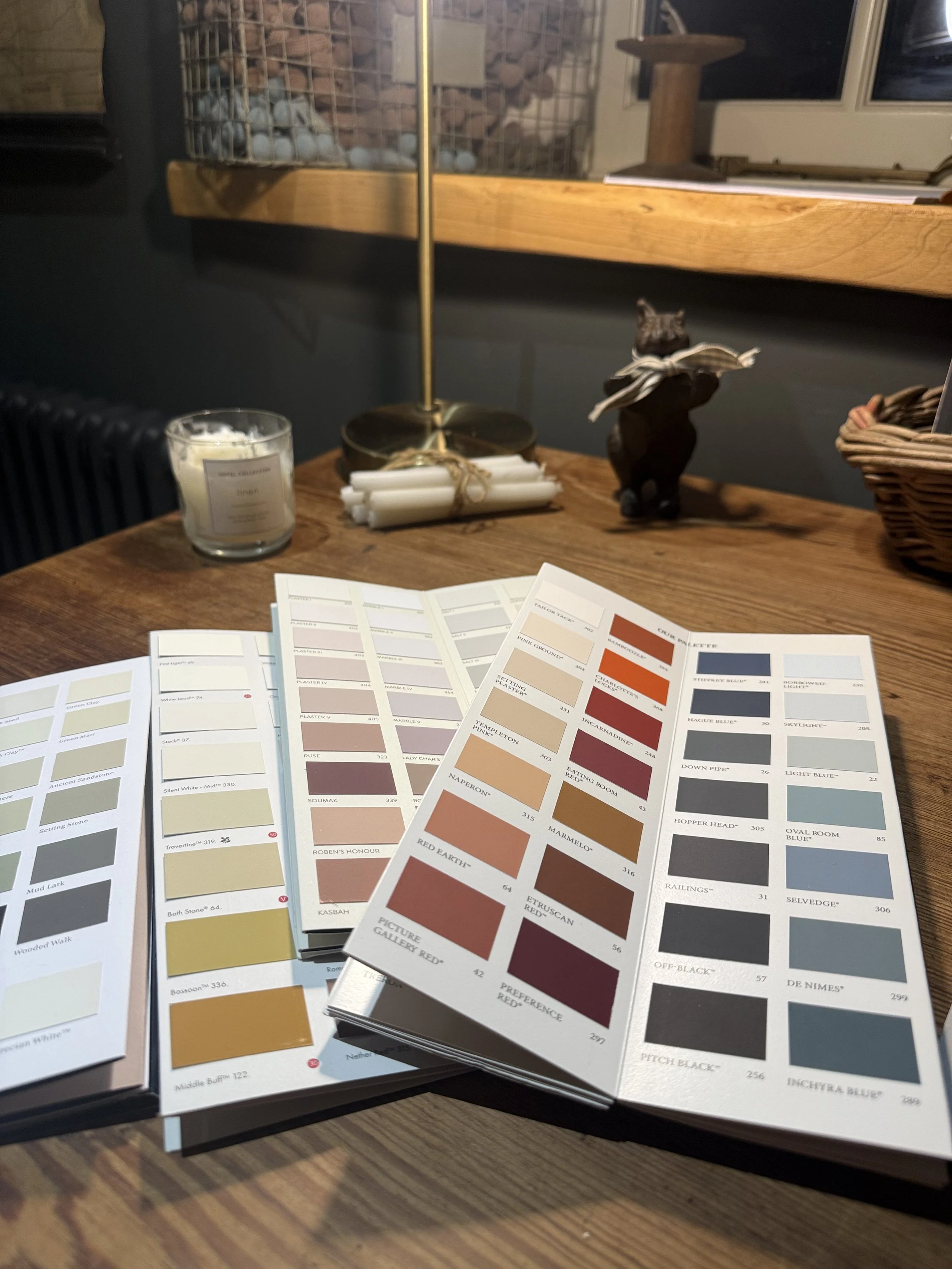
It's All About the Feeling
One of the things I found particularly fascinating when studying interior design was colour psychology. The idea that different colours can influence our mood, our emotions and even the way we experience a space.
Think about it. We naturally associate certain colours with certain feelings.
Green often makes us think of nature, balance and calm. Blue can feel peaceful and restful. Yellows and oranges bring warmth and energy, while rich reds can make a room feel wonderfully cosy and inviting.
Of course, it's not quite as simple as painting your kitchen yellow and suddenly becoming the happiest person in the world. If only!
Our reactions to colour are incredibly personal. A colour that makes one person feel relaxed might leave someone else feeling completely uninspired. And that's what makes designing a home so interesting.
A Little Colour Can Go a Long Way
The lovely thing is that you don't need to paint every wall in a dramatic colour to make an impact.
Sometimes it's the smallest touches that make the biggest difference.
A beautiful olive-green armchair, a collection of cinnamon-coloured cushions, a soft pink lampshade or a piece of artwork that brings several colours together.
These little details can completely change the atmosphere of a room.
And colour doesn't have to mean bright colour, either. I'm a huge fan of those wonderfully muddy, muted shades that are sometimes quite difficult to describe. Is it green? Is it grey? Is it brown? Who knows, but it looks lovely!
Often it's the subtle combinations of colours, rather than one particular shade, that make a room feel really special.
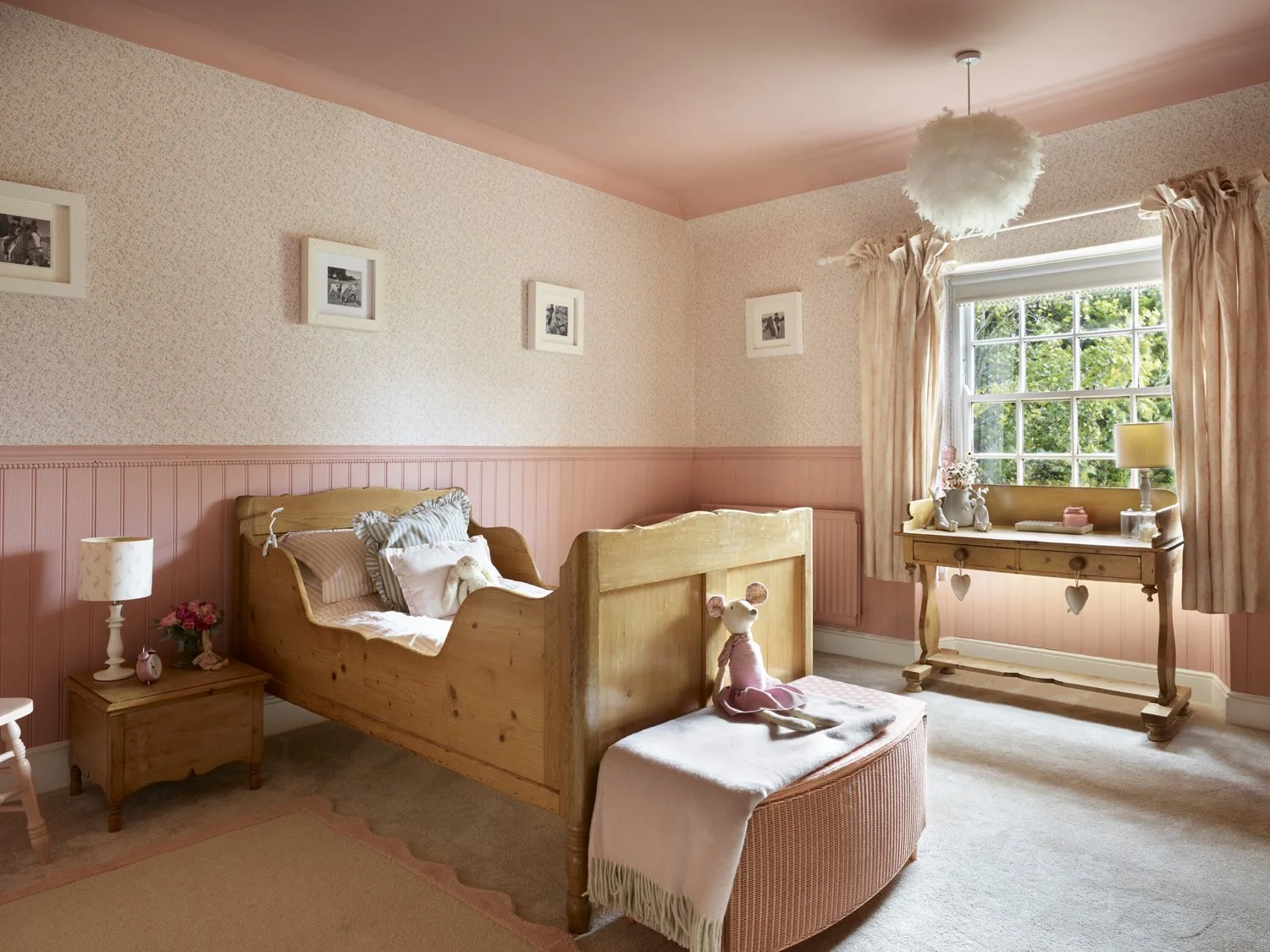
Soft pink panelling complimented by a beautifully painted ceiling.
Forget the Rules (Well, Some of Them)
There's a whole science behind which colours work together. Colour wheels, complementary colours, harmonious schemes and all sorts of clever theories.
And while understanding these things is incredibly useful, I don't believe a home should ever feel like it's been decorated according to a textbook.
Some of the loveliest rooms are those where the colours aren't an obvious match, but somehow they just work.
Perhaps it's an old inherited chair upholstered in a colour you'd never have chosen yourself, or a favourite painting that introduces something completely unexpected.
Those are often the things that give a room its personality.
Because ultimately, your home should reflect you, not the latest colour trend or somebody else's idea of what looks beautiful.
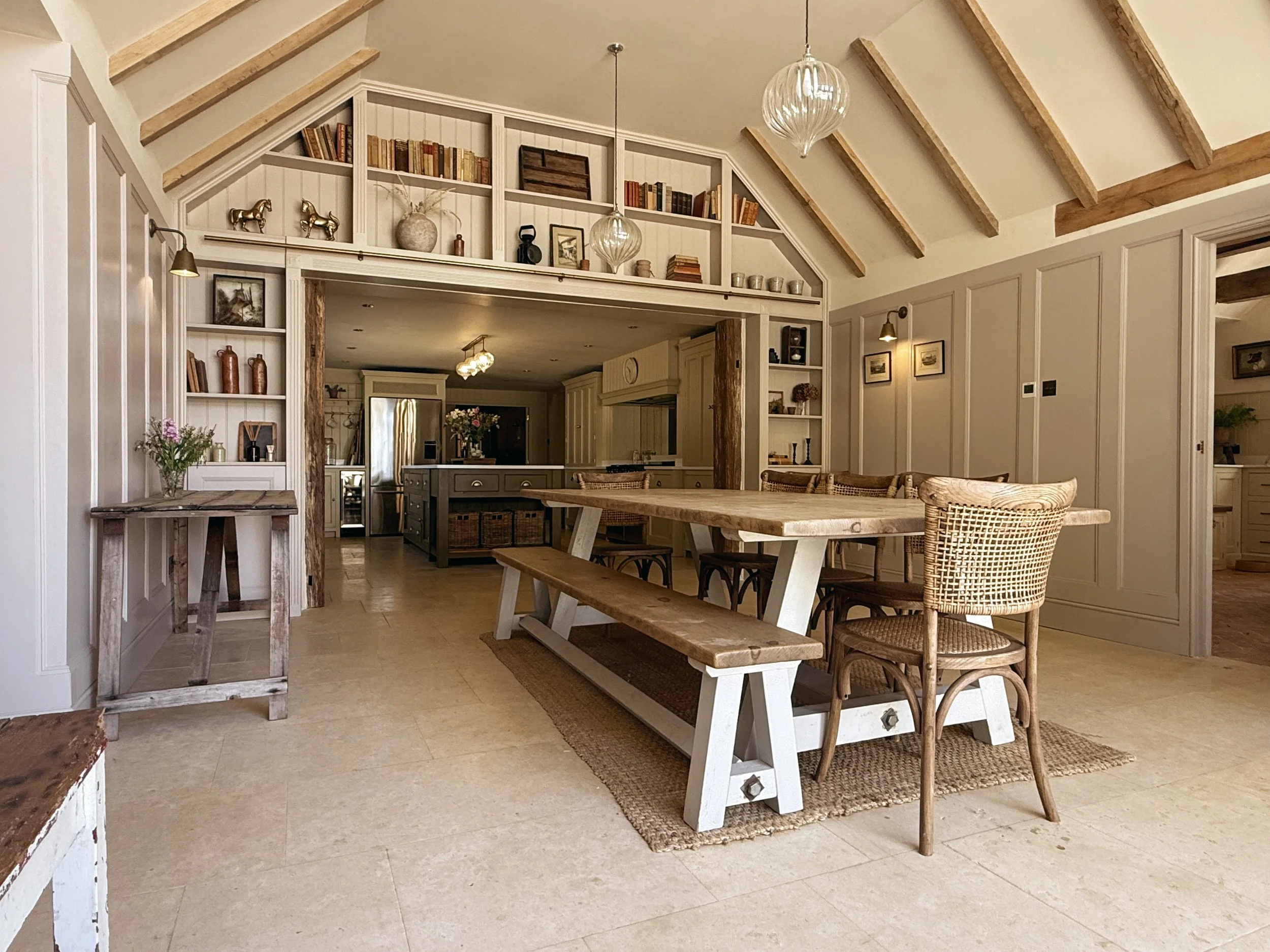
Subtle, understated colour can be just as effective as a bold statement.
So, Where Do You Start?
Before choosing a colour for a room, I always think it's worth asking yourself one simple question.
How do I want this room to feel?
Do you want somewhere calm and peaceful to escape to at the end of the day? A warm, welcoming space where everyone naturally gathers? Or perhaps somewhere a little more playful and full of energy?
Once you know the feeling you're trying to create, choosing the colours becomes so much easier.
And don't be afraid to trust your instincts. If you've always loved a particular colour, there's probably a reason for it.
After all, the best homes aren't necessarily the ones with the most fashionable colour schemes. They're the ones that make you smile when you walk through the door. For most of my life, I was never a fan of green. I blame years of wearing a green school uniform! Yet now it’s probably my favourite go-to colour when decorating. Just goes to show how much our tastes can change.
And really, isn't that what it's all about?
Heidi x